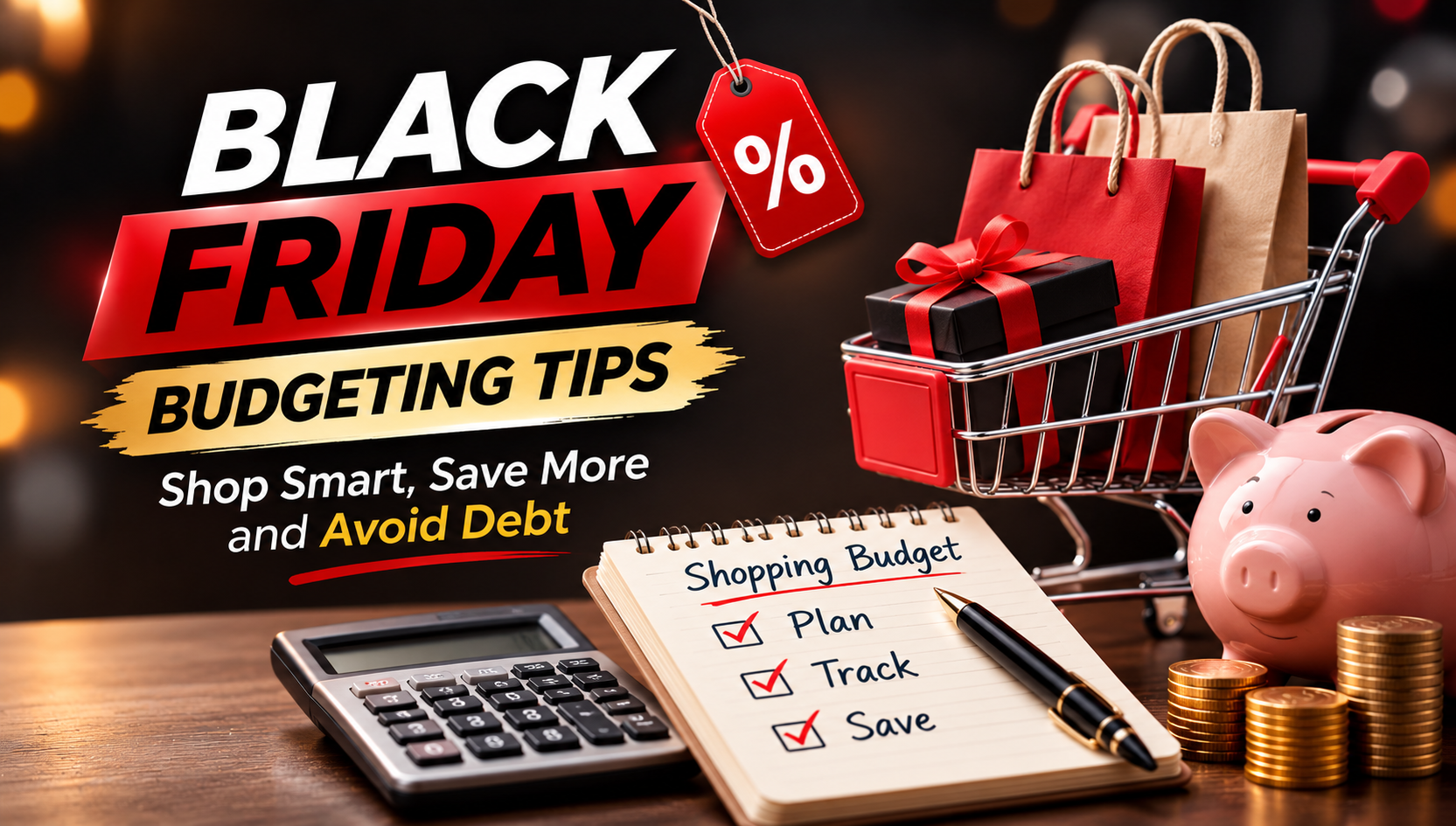
Black Friday Budgeting 2026: How to Shop Smart Without Overspending or Falling into Debt
Black Friday is one of the biggest shopping events of the year. From electronics and clothing to household essentials and online subscriptions, retailers offer attractive promotions that encourage consumers to spend.
But here's something worth remembering: Getting a discount doesn't automatically mean you're saving money.
A product advertised at 50% off can still be an unnecessary expense if you weren't planning to purchase it in the first place. Similarly, using credit cards or Buy Now, Pay Later (BNPL) services without a repayment plan can turn a short shopping event into months of financial pressure.
Black Friday 2026 falls on November 27, making it a good opportunity to rethink your shopping habits and approach seasonal spending more carefully.
Whether you're shopping for yourself, purchasing holiday gifts or upgrading household essentials, this guide will help you create a realistic budget, identify genuine deals and protect your financial goals.
1. Set a Black Friday Budget Before Shopping
The first step towards smarter Black Friday shopping is deciding how much you can comfortably afford to spend.
Instead of browsing promotional offers and deciding your budget afterwards, establish a spending limit before the sales begin.
Start by reviewing your monthly income, essential expenses and existing financial commitments.
Consider the following:
-
Monthly rent or mortgage payments.
-
Groceries and household expenses.
-
Electricity, internet and utility bills.
-
Transportation costs.
-
Existing loan and credit card repayments.
-
Savings and emergency fund contributions.
-
Planned personal and family expenses.
Once you've accounted for these commitments, identify how much disposable money remains.
You can allocate a portion of that amount towards Black Friday purchases without affecting essential expenses or savings goals.
Create a Simple Shopping Budget
For example, suppose your available shopping budget is $300.
You could divide it into the following categories:
| Shopping category | Budget allocation |
|---|---|
| Essential purchases | $150 |
| Planned gifts | $75 |
| Personal purchases | $45 |
| Additional expenses | $30 |
| Total | $300 |
This is only an illustrative budget. Your actual spending limit should depend on your income, financial commitments and savings priorities.
The important thing is to establish a limit and avoid increasing it simply because you discover additional discounts.
2. Make a Shopping List and Prioritise What You Actually Need
Black Friday promotions are designed to attract attention.
Limited-time offers, countdown timers and large discount percentages can encourage consumers to purchase products they never intended to buy.
A shopping list helps you separate genuine needs from impulse purchases.
Before browsing online stores, write down:
-
Products you genuinely need.
-
Items you have been planning to replace.
-
Gifts you need to purchase.
-
Products that can wait until another sale.
-
Items you should avoid purchasing.
You can also assign a maximum price to each item.
For example, if you need a laptop, decide your preferred specifications and maximum spending limit before comparing offers.
This approach makes it easier to reject attractive but unsuitable promotions.
For additional everyday spending strategies, read our guide on Best Money Saving Tips That Actually Work Every Day.
3. Track Your Expenses During Black Friday
Setting a budget is useful, but following it is even more important.
Many shoppers make the mistake of tracking their spending only after completing several purchases. By then, they may have already exceeded their planned limit.
Instead, record each purchase immediately.
Simple Ways to Track Black Friday Spending
Use a spreadsheet
Create columns for product name, planned price, actual price, purchase date and payment method.
Use a budgeting application
A budgeting tool can help categorise expenses and provide a clearer picture of your spending.
Review banking transactions
Check your bank and credit card transactions regularly to identify unexpected charges.
Keep purchase confirmations
Save digital receipts, order confirmations and refund details so you can monitor returns and cancellations.
Set a spending reminder
Review your remaining budget before making another purchase.
If you want a more structured approach, read our guide on Smart Ways to Track Expenses and Manage Your Budget.
The article explains how expense tracking, budgeting tools and regular financial reviews can help you understand your spending habits.
4. Don't Confuse Discounts with Genuine Savings
One of the biggest mistakes shoppers make during Black Friday is assuming that a large discount percentage represents a good financial decision.
Consider this example:
A retailer advertises a product for $120 after reducing its displayed price from $200.
The promotion claims a 40% discount.
However, what if the same product was regularly available for $125 at another retailer?
The actual saving compared with that alternative is only $5.
This is why comparing prices is more important than trusting promotional labels.
How to Identify Genuine Discounts
-
Compare the same product across multiple retailers.
-
Check historical prices wherever reliable data is available.
-
Verify the exact model and specifications.
-
Include delivery charges and taxes.
-
Read product reviews before purchasing.
-
Check the retailer's return and refund policy.
The Federal Trade Commission's online shopping guide provides useful guidance on researching sellers, comparing products and understanding online purchase conditions.
Remember, a genuine saving is money you avoid spending on something you already intended to buy.
5. Be Careful with Credit Cards During Black Friday
Credit cards can make shopping convenient, but they can also encourage people to spend beyond their actual budget.
The problem begins when shoppers treat their available credit limit as additional income.
For example, purchasing a $500 product on a credit card doesn't mean the product costs nothing today. It creates a repayment obligation.
If you carry a balance, interest charges can increase the actual purchase cost.
How to Use Credit Cards More Responsibly
Pay attention to your available budget
Your credit limit should never determine how much you can afford to spend.
Understand the interest rate
Check your card's APR and whether a grace period applies to new purchases.
Pay the statement balance in full where possible
For cards with an interest-free grace period, paying the full statement balance by its due date can help avoid purchase interest.
Avoid unnecessary cash advances
Cash advances may carry separate fees and interest conditions.
Monitor your transactions
Check your statement regularly and report suspicious transactions promptly.
If you're already carrying credit card debt, adding more purchases for the sake of seasonal discounts may make your financial situation worse.
Already Struggling with Debt? Explore Your Options
If you're already carrying significant credit card balances or struggling with multiple unsecured debts, adding more purchases during Black Friday could make your financial situation more difficult.
Instead of taking on additional credit, consider reviewing your existing repayment options first. For readers in the United States, One Debt Solution provides information about debt relief options and connects consumers with third-party providers that may help with credit card debt, personal loans and other eligible debts.
6. Understand the Risks of Buy Now, Pay Later Offers
Buy Now, Pay Later services have become increasingly popular during online shopping events.
They allow consumers to divide purchases into multiple instalments, sometimes advertising interest-free payments.
Although this can appear convenient, BNPL is not free money.
Depending on the provider and plan, missed payments may result in late fees, other charges or collection activity. Multiple instalment plans can also make repayment dates difficult to manage.
What to Check Before Using BNPL
-
Total purchase amount.
-
Number of instalments.
-
Payment dates.
-
Late payment charges.
-
Automatic debit conditions.
-
Return and refund procedures.
-
Whether missed payments are reported to credit bureaus.
The National Consumer Law Center's guidance on holiday shopping and BNPL debt explains how instalment plans and deferred-interest credit promotions can create financial difficulties.
A sensible rule is simple: if you cannot comfortably afford the purchase without relying on future income, reconsider whether you need it.
7. Protect Your Emergency Fund Instead of Spending It on Discounts
An emergency fund exists to protect you against unexpected financial situations.
It can help cover expenses such as medical emergencies, temporary income loss, urgent repairs and other essential needs.
Using emergency savings for discounted electronics, fashion or holiday gifts defeats the purpose of having that financial safety net.
Before making a Black Friday purchase, check whether it affects your existing savings commitments.
If you have been building an emergency fund, continue prioritising that goal.
Our guide on How to Build an Emergency Fund explains how regular contributions and separate savings arrangements can help create financial stability.
Remember that a temporary discount should not come at the cost of long-term financial security.
8. Use the 24-Hour Rule to Avoid Impulse Purchases
Not every attractive promotion deserves an immediate purchase.
A simple technique is to wait 24 hours before completing a non-essential purchase.
During that time, ask yourself:
-
Did I actually plan to buy this product?
-
Is the price genuinely competitive?
-
Can I comfortably afford it?
-
Does it offer long-term value?
-
Will I still want it next week?
-
Could the money be used for a more important financial goal?
This short pause can help you distinguish genuine requirements from temporary shopping excitement.
For limited-time promotions, you can still research the offer quickly, but don't allow urgency to replace financial judgment.
9. Black Friday vs Cyber Monday: Should You Wait for Another Sale?
Black Friday isn't the only major shopping event during the holiday season.
Cyber Monday follows on November 30, 2026.
Retailers may extend promotions across both events, but there is no guarantee that Cyber Monday will offer better prices.
Instead of waiting for another sale simply because it sounds promising, compare the actual prices and your financial requirements.
A product that meets your needs and budget today may be a better purchase than an uncertain promotion later.
Also remember that not purchasing anything is a perfectly valid financial decision.
10. A Practical Black Friday Financial Checklist
Before completing your purchases, review this checklist:
-
Set a total shopping budget.
-
Prioritise essential purchases.
-
Prepare a shopping list.
-
Compare prices across retailers.
-
Check the product's historical price where possible.
-
Calculate delivery charges and taxes.
-
Avoid unnecessary credit card spending.
-
Understand BNPL repayment conditions.
-
Protect your emergency savings.
-
Record every purchase.
-
Review return and refund policies.
Following these steps can help you enjoy Black Friday promotions without losing control of your finances.
Final Thoughts: Make Black Friday a Smart Financial Decision
Black Friday can provide opportunities to purchase useful products at attractive prices, but shopping discounts should never take priority over your financial well-being.
The smartest approach is to prepare a realistic budget, identify what you actually need, compare prices and understand the costs associated with credit and instalment payments.
You don't need to avoid every sale to manage your money responsibly. You simply need to make purchases that fit your financial situation.
Remember, the money you don't spend unnecessarily can support more important goals, whether that's building an emergency fund, paying off debt or saving for the future.
Shop with a plan. Spend with purpose. Protect your financial future.
Explore more practical money management advice through KnowledgeBox24's Finance section.
Disclaimer: This article is intended for general financial education and does not constitute personalised financial advice. Credit card terms, BNPL fees, consumer protections and financial regulations vary by country and provider. Review the applicable terms and consider your individual financial circumstances before making borrowing or spending decisions.